School Subjects
 Children's Books
 Educational Toys
 Children's Literature
 Gift Ideas
 Parent Resources
 Reference
 Religious Goods
 Saint Biographies
 School Spirit
 Seasonal
 Test Prep









 Categories
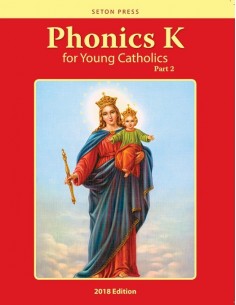
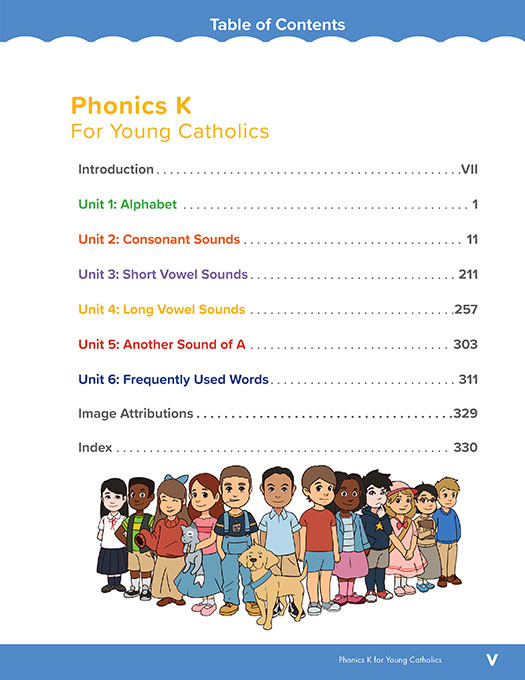
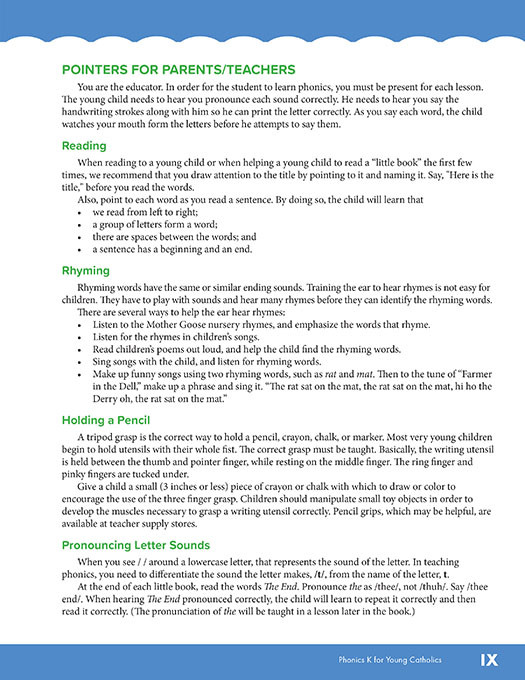
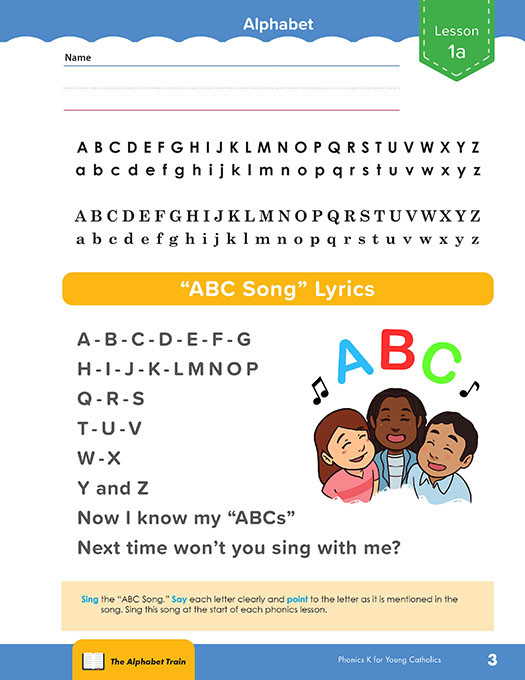
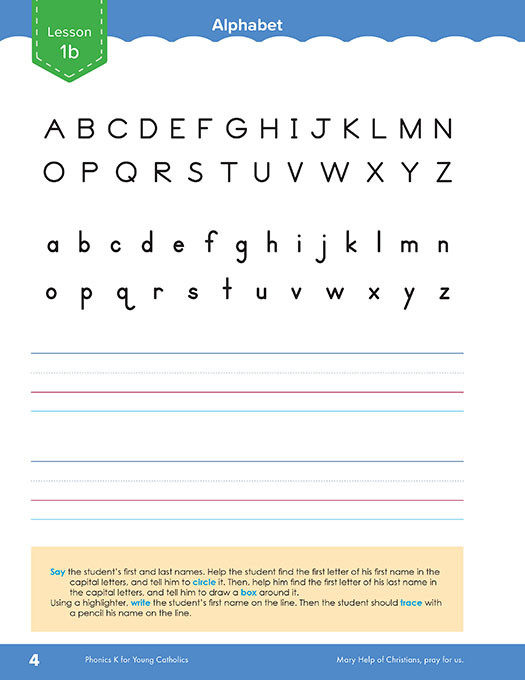
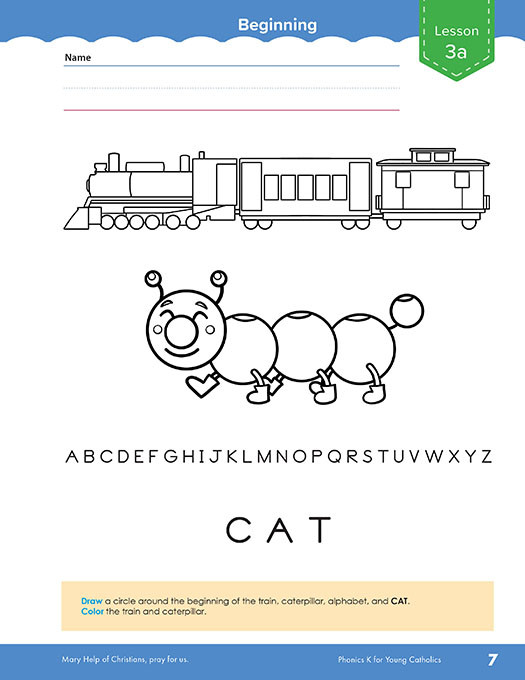
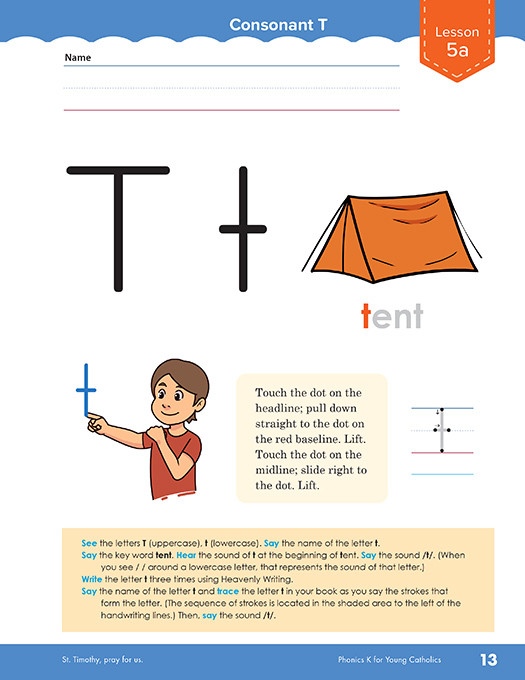
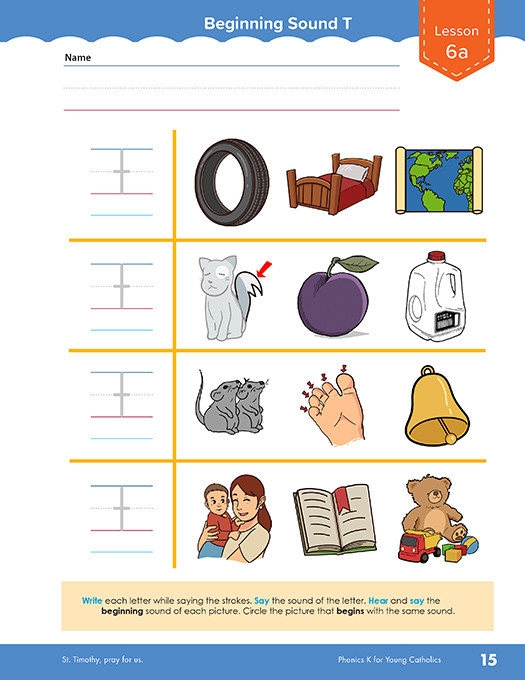
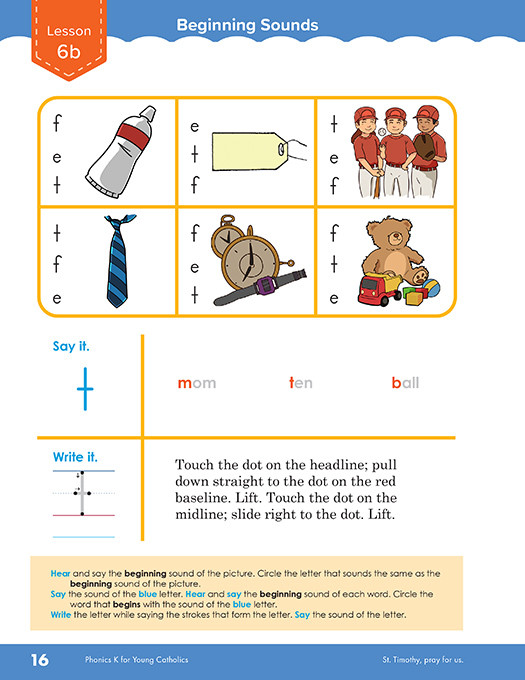
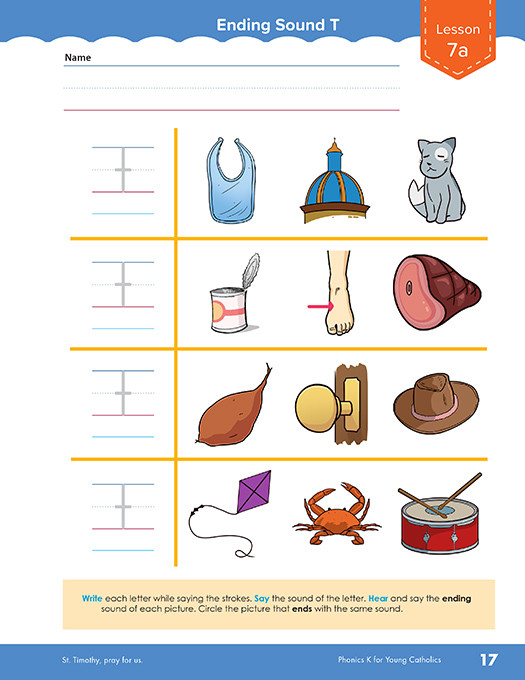
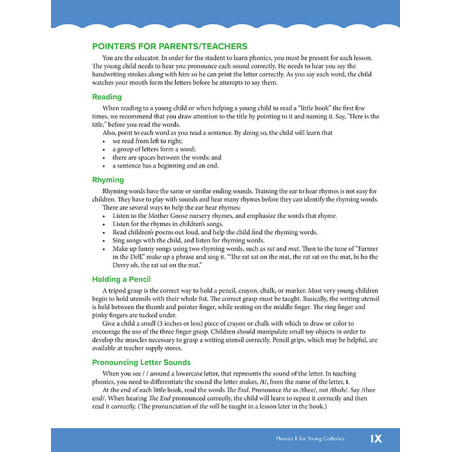
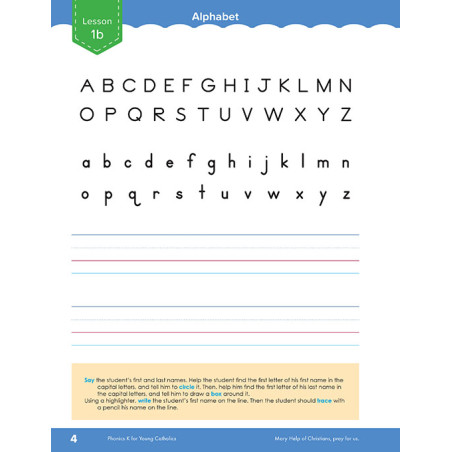
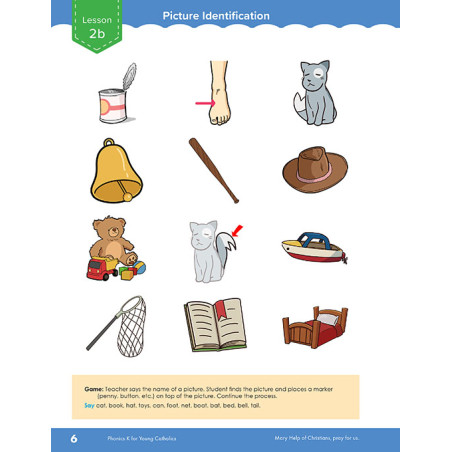
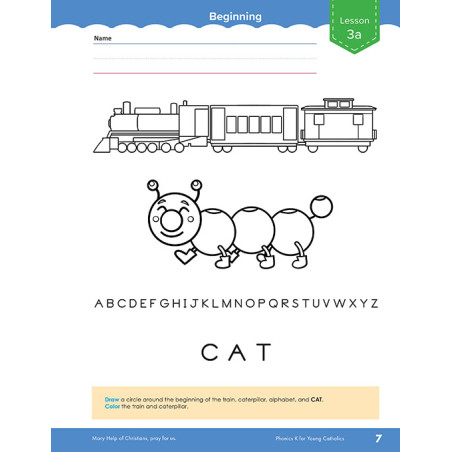
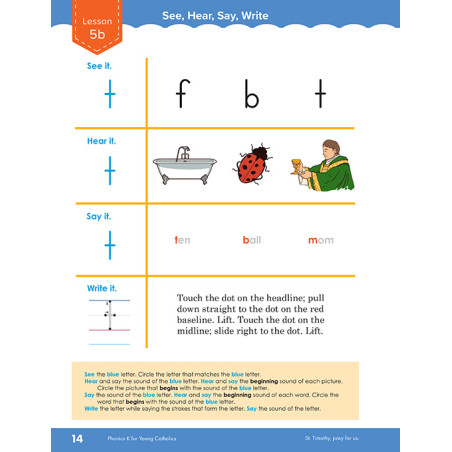
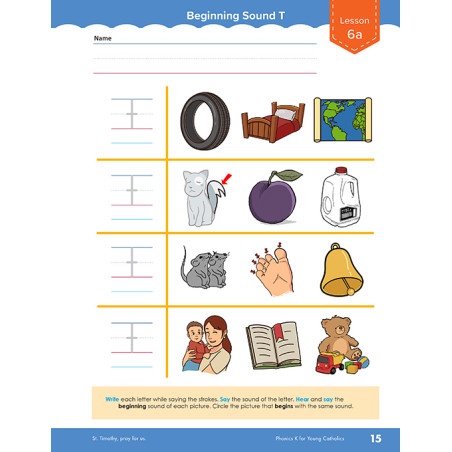
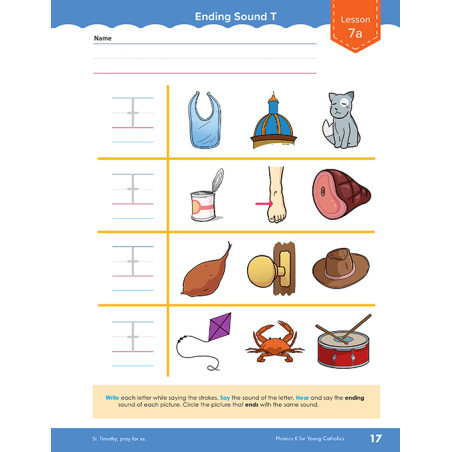
In Phonics K for Young Catholics, the young student takes his first steps into the world of reading. He learns to recognize letters of the alphabet, their names, their sounds, and how to write them. With this knowledge, he combines the sounds of letters to form words, and so begins the process of reading.
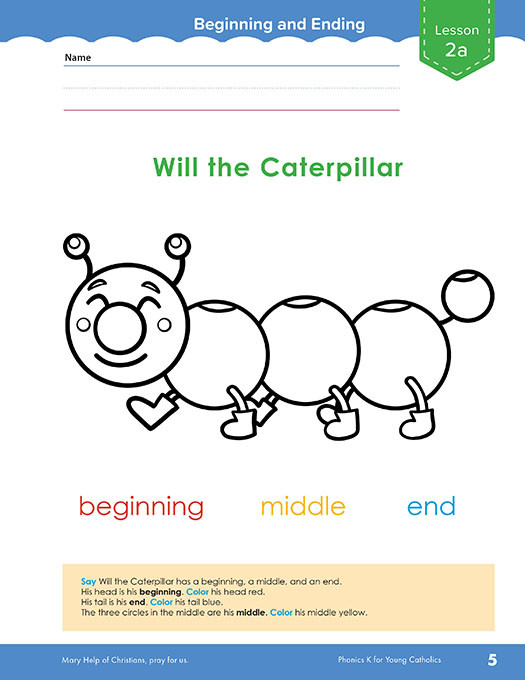
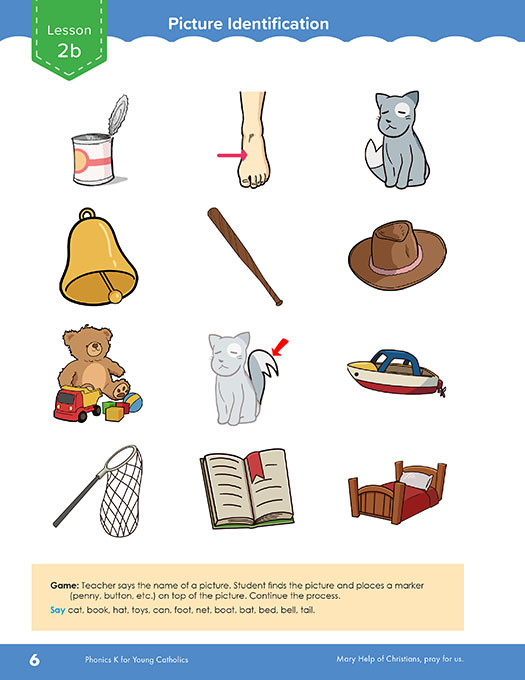
A cast of young characters guides and teaches the young student with colorful drawings, games, and rhymes. Little books and many other activities are included to guarantee that Phonics K for Young Catholics will make these first steps the beginning of a most exciting and enjoyable journey.
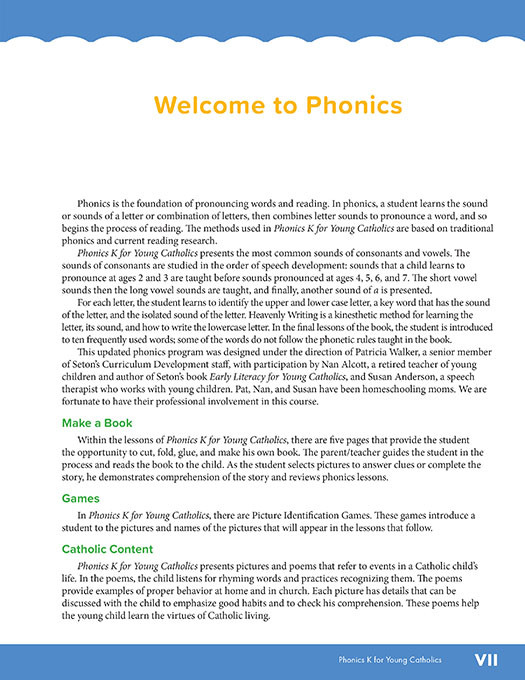
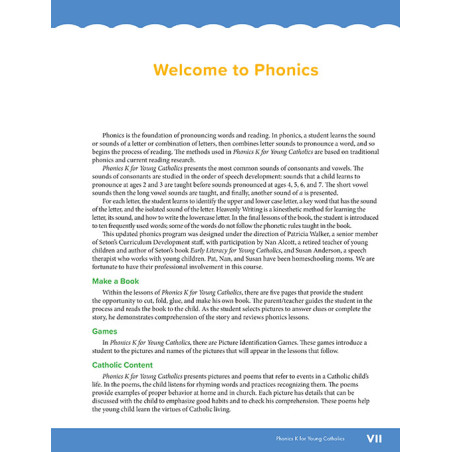
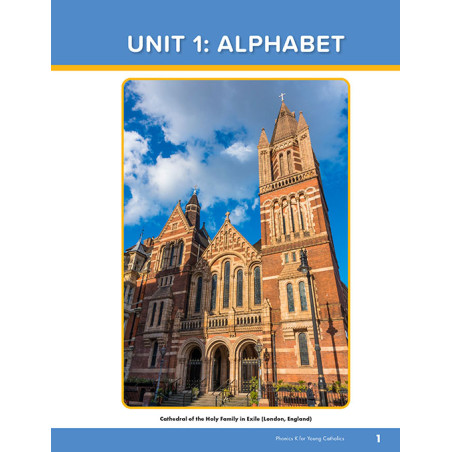
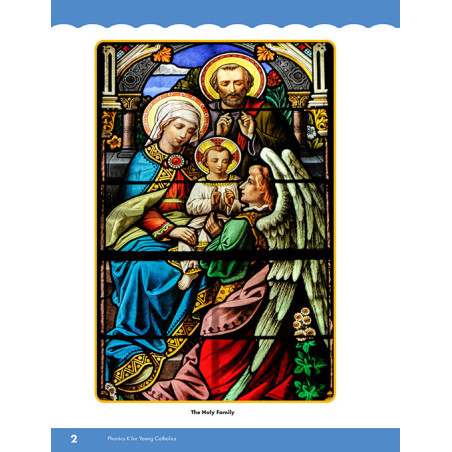
Woven throughout Phonics K for Young Catholics are pictures and poems of events in a Catholic child’s life. As the parent/teacher reads these out loud to the student, the child listens for comprehension and rhyming words while reinforcing wholesome and Catholic values. Copyright 2021. Full Color. 317 pp.
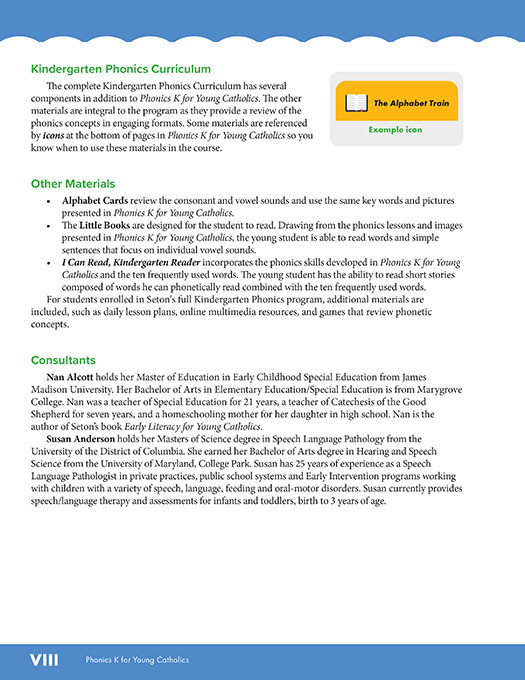
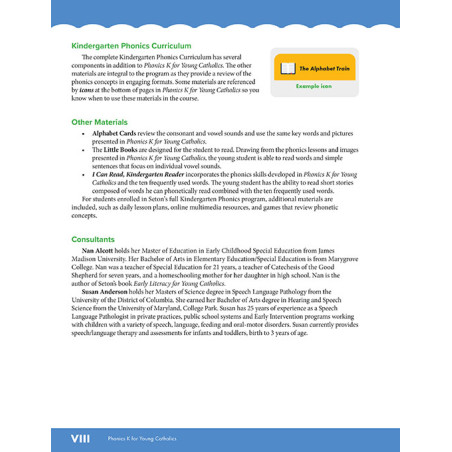
The complete Kindergarten Phonics Curriculum has several components in addition to the Phonics K for Young Catholics workbook. The other materials are an integral to the program as they provide a review of the phonics concepts in engaging formats. These additional materials are referenced by icons at the bottom of pages in the workbook so that you know when to use these materials.